
ALCC India
 human eye, eye
 0 comment
 09 Oct, 2025
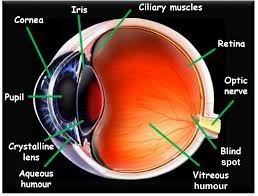
The human eye is roughly the size of a ping-pong ball and consists of several important parts, each with a specific function:
The transparent, dome-shaped front layer that bends (refracts) light to help focus it onto the retina.
The dark circular opening in the center of the iris. It changes size to control the amount of light entering the eye.
The colored part of your eye (blue, green, brown, etc.), which controls the size of the pupil.
Located behind the iris, the lens further focuses light onto the retina. It changes shape to focus on near or far objects (a process called accommodation).
A thin layer of tissue at the back of the eye that contains photoreceptor cells—rods and cones—which detect light and color.
The “messenger” that carries visual information from the retina to the brain, where the image is processed.
Here's a simplified breakdown:
Light enters through the cornea.
It passes through the pupil, which adjusts depending on light intensity.
The lens focuses the light onto the retina.
The retina converts light into electrical signals.
These signals are sent via the optic nerve to the brain.
The brain interprets these signals as images.
So what you "see" is actually your brain's interpretation of light and color!
Myopia (Nearsightedness): Can see nearby objects clearly, but distant objects appear blurry.
Hyperopia (Farsightedness): Distant objects are clear, but close ones are blurry.
Astigmatism: Irregular curvature of the cornea or lens, causing blurry vision.
Cataracts: Clouding of the lens, common in older adults.


ALCC India
0 comment